If you drop the bar, buy bumpers. If you never do, buy iron. That is the whole decision for most garage gyms; the rest of this guide covers the exceptions and the details that separate a good set from one you replace in two years. Bumpers are thick rubber discs built to hit the floor from overhead. Iron is thin, cheap per pound, and lets you load far more on a sleeve. Our pick for most first-time buyers is the CAP Barbell Economy Olympic Bumper Plate Set, 260 lb, a full working set for about a dollar a pound.
We compared four sets on the numbers that change your training: durometer and bounce, thickness and sleeve space, hub inserts, weight tolerance, and cost per pound. Specs come from the manufacturers and from published reviews at Garage Gym Reviews and BarBend; we do not lab-test equipment, and we say where each claim comes from.
Plates have to match your bar and rack. If you are still choosing those, start with our guides to Olympic barbells compared and choosing a squat rack for a compact garage. Everything below assumes a 2-inch Olympic sleeve.
Our pick (bumpers)
CAP Barbell Economy Olympic Bumper Plate Set, 260 lb
260 lb (10, 15, 25, 35, 45 lb pairs) · virgin/recycled rubber blend · steel floating hub · uniform IWF-standard diameter · 30-day warranty
A complete five-pair bumper set for roughly a dollar a pound, with a steel hub and a uniform diameter so every plate meets the floor on a deadlift. The trade-offs: a 30-day warranty, a livelier bounce than premium virgin rubber, and owner reports of a greasy film on arrival.
$259.99 for the 260 lb set · in stock, verified Sep 22, 2026 · the listing also sells 100 to 370 lb sets at other prices
On this page
Who needs bumpers, who needs iron
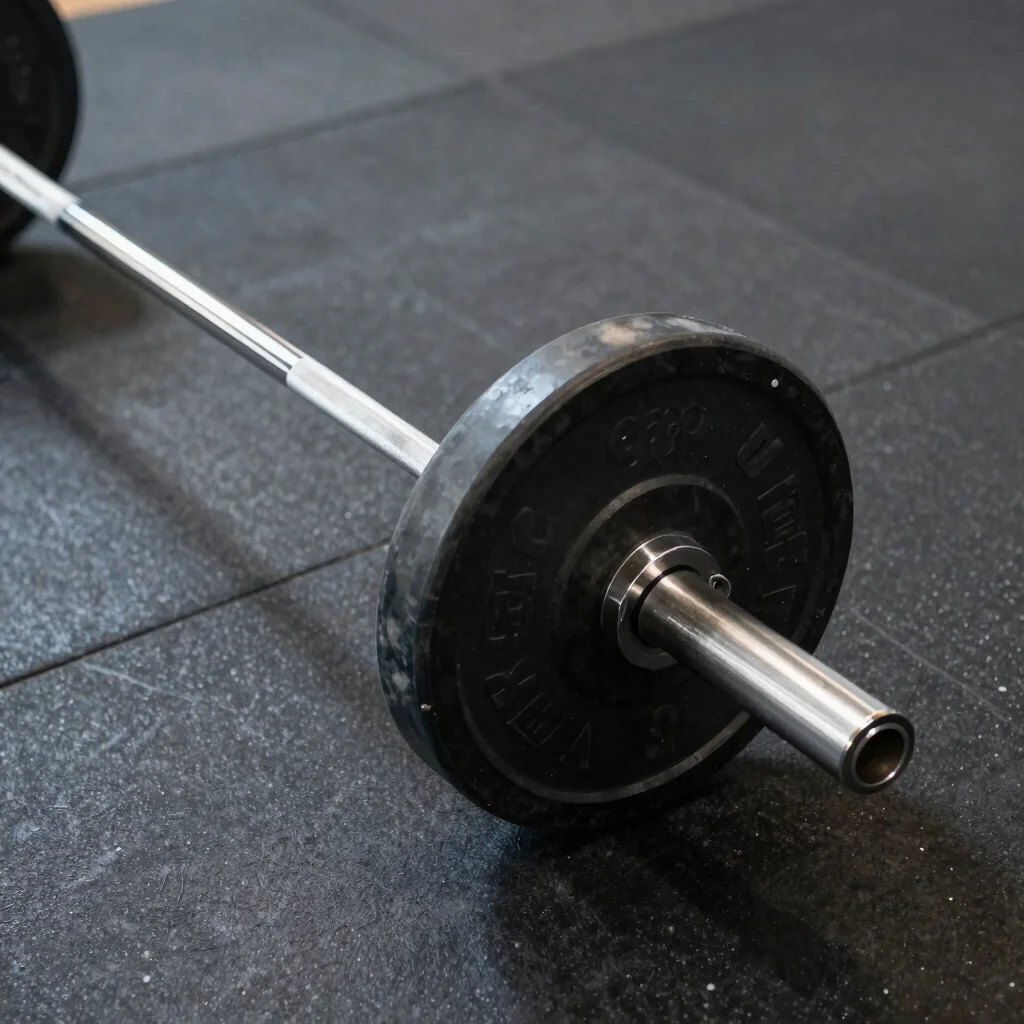
Bumpers exist so a loaded bar can hit the floor without hurting the plates, the bar, or the slab. BarBend puts it plainly: Olympic weightlifters and CrossFitters need bumper plates, and so does any workout where you drop from the hips or overhead. Iron dropped on concrete chips, cracks, and eventually cracks the floor; Garage Gym Reviews calls it a sure way to throw money away.
Iron wins when the bar is always under control. Powerlifters, bodybuilders, and anyone whose program is squat, bench, deadlift, and press lowers the bar rather than dropping it, and gets more weight per dollar, per inch of sleeve, and per rack peg. REP Fitness, which sells both, says competitive powerlifters usually prefer iron.
Two honest reasons a non-dropper still buys bumpers: noise (iron clanks, bumpers thud) and inexperience, since REP and Garage Gym Reviews both recommend bumpers as the safe default for a beginner who does not yet know what they will be doing in a year. Our rule: if the bar will ever touch the floor from above knee height, buy bumpers first. If not, buy iron and put the savings into a better bar.
Durometer and bounce: the number most listings hide
Durometer (Shore A) measures rubber hardness: a higher number means a harder plate that rebounds less, which is why “dead bounce” plates are the harder ones. Garage Gym Reviews’ bumper guide gives a usable scale: 85 to 88 is a dead bounce, 88 is the low-bounce standard of Rogue’s Echo plates, and 94 is competition-grade. In a garage, a lively plate sends the bar wandering toward a rack upright or your shins; a dead plate stays put and is quieter.
Of our picks, only Fringe Sport publishes durometer: 85 sHA on the 25 to 55 lb plates and a harder 90 sHA on the 10s and 15s so the thin ones survive solo drops. CAP calls its Economy bumpers “medium bounce” and publishes no figure, typical at the price; owner reports and the Top Gym Picks review both describe a livelier, less premium-feeling bounce than virgin-rubber plates without calling them dangerous.
Thickness and sleeve space: how much fits on the bar
A 7-foot Olympic bar has roughly 16 inches of loadable sleeve, per Two Rep Cave’s barbell dimensions guide, which estimates about nine 45 lb iron plates per side or about half that with bumpers. REP Fitness frames it the same way for storage: a 6-inch weight horn holds four 45 lb bumpers or seven 45 lb irons.
A 2.3-inch bumper like Fringe Sport’s 45 is thin for its class: Garage Gym Reviews measured a 2.58-inch average across its guide, with some economy bumpers near 3 inches, while bare cast-iron 45s run 1.25 to 1.8 inches. Six Fringe 45s per side is 13.8 inches of sleeve, leaving room for a 25 and a collar: 585 lb on a 45 lb bar before the 25s, 635 lb with them, more than most garage lifters will need. Past 600, thin iron 45s (or bumpers inside, iron outside) are the only way there on a standard sleeve, and Garage Gym Builder warns that a mixed stack of bumpers and smaller-diameter iron is not drop-safe, because the bumpers take the whole impact.
Hub inserts, weight tolerance, and hex vs round
Hub inserts. The steel ring in a bumper’s center rides on your bar and is the first thing to fail on cheap plates: it loosens, spins, or pops out. Fringe’s hooked stainless insert, anchored into the rubber so it cannot work loose, and CAP’s reinforced floating hub both beat the plain pressed-in ring on the plates that fill complaint threads.
Weight tolerance. Fringe Sport rates its bumpers at plus or minus 1 percent, which Garage Gym Reviews calls the standard for good bumpers. Garage Gym Builders weighed the CAP 300 lb set’s 45s at 44.7 and 45.1 lb, within 1 percent, with the 2.5s off by up to 4 percent. In a garage this rarely matters; if you want matched pairs, weigh them on a bathroom scale.
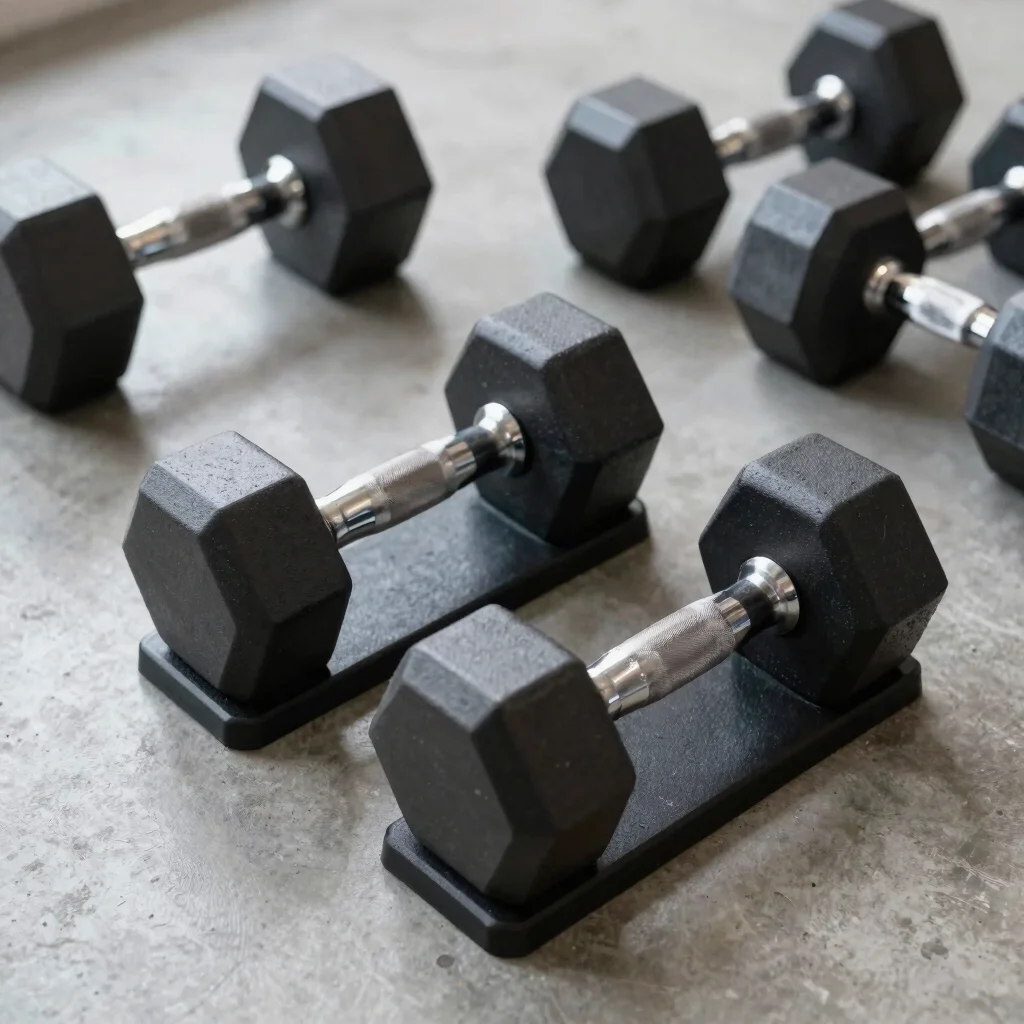
Hex vs round. Hexagonal iron plates are cheaper to cast and common in big-box starter sets. They are fine for squats, bench, and presses and a bad idea for deadlifts and rows: the plate lands on a corner or a flat, so the bar sits at a different height every rep, and lifters on a T Nation thread say deadlifts on hex plates feel like rack pulls. Every plate in this guide is round; if you buy elsewhere, insist on round.
Starter-set math: what a usable set really costs
Price per pound is the only fair comparison. Divide the delivered price by plate weight, and remember a set that includes a bar is pricing two products. Amazon prices below were checked Sep 22, 2026.
- CAP Economy bumpers, 260 lb at $259.99: about $1.00 per pound. Garage Gym Reviews uses $2.49 per pound as its average bumper price, and its cheapest recommended sets (Titan’s Economy bumpers) start around $1.50 per pound, so this is unusually cheap.
- Fringe Sport Black bumpers, 160 lb at $399: about $2.49 per pound. Larger sets are cheaper per pound (the 370 lb set is $889 on Fringe’s site); Garage Gym Reviews quotes $1.79 per pound across the range.
- REP rubber-coated tri-grip plates, from about $250 per 45 lb pair: roughly $2.40 to $2.80 per pound depending on the day’s price, for handles, a low-odor coating, and a bumper-matching 17-inch diameter.
- CAP 300 lb iron set with bar, $397.18: about $1.32 per pound for the whole kit, but the 300 lb includes the 45 lb bar, so it is 255 lb of plates plus a bar.
A 260 lb set plus a 45 lb bar reaches a 305 lb squat or deadlift, a year or two of progress for most beginners; a 160 lb set covers a 205 lb bar, enough for Olympic lifts and early strength work. Buy for where you will be in a year and add a pair of 45s later. If the whole budget is tight, our home gym under $1,000 plan shows where plates fit against a rack, bar, and bench.
Our picks, compared
Two bumper sets and two iron, chosen because their specs are published, their listings were live on Sep 22, 2026, and each wins a clear use case. More options live in our barbells and plates category.
| Product | Type | 45 lb thickness | Tolerance | Warranty | Price (Sep 22, 2026) |
|---|---|---|---|---|---|
| CAP Economy Bumper Set, 260 lb | Bumper, virgin/recycled blend, steel hub | Not published | Not published | 30 days | $259.99 (about $1.00/lb) |
| Fringe Sport Black Bumpers, 160 lb | Bumper, virgin rubber, 85/90 sHA, hooked stainless insert | 2.3 in | +/-1% | Lifetime (home use) | $399.00 (about $2.49/lb) |
| REP Rubber Coated Tri-Grip Plates | Cast iron, rubber coated, not for dropping | 2.25 in | +/-3% | 1 year | From about $250 per 45 lb pair |
| CAP 300 lb Olympic Set with bar | Cast iron, painted, plus 7 ft bar | Not published | 45s within 1%, 2.5s up to 4% (reviewer-weighed) | Not published | $397.18 (about $1.32/lb incl. bar) |
CAP Barbell Economy Olympic Bumper Plate Set, 260 lb: our pick for bumpers
This is the set we would tell a friend to buy for a first garage gym that will see cleans, floor deadlifts, or CrossFit-style work. Five pairs for $259.99 is roughly a dollar a pound, well under the $2.49 per pound average in Garage Gym Reviews’ bumper guide. CAP says the plates use a virgin-and-recycled rubber blend over a reinforced steel floating hub, with a uniform diameter so the 10s sit at the same height as the 45s. What you give up shows up after year two: a 30-day warranty, no published durometer or tolerance, a livelier bounce, and a greasy mold-release film owners say needs cleaning.
- What we like: a complete set at about $1.00 per pound; steel hub; uniform diameter for deadlifts; color-coded weight markers.
- What we don’t: 30-day warranty; bouncier recycled blend; no published durometer or tolerance; greasy on arrival.
Who it is for: beginners and budget garage gyms that need a full bumper set now and accept a five-year plate rather than a lifetime one. The pick box with the checked price is at the top of this guide.
Fringe Sport Black Bumper Plates, 160 lb set: best premium bumpers
If the CAP set is the five-year plate, this is the spend-once plate. Fringe Sport publishes everything CAP does not: 100 percent virgin rubber, durometer, a hooked stainless steel insert, a 450 mm IWF diameter, plus or minus 1 percent tolerance, a lifetime warranty for home use, and a 45 that is only 2.3 inches thick. Garage Gym Reviews named these its best overall bumper, and its in-depth review notes Fringe Sport encourages dropping the 10 lb plates from overhead on their own, which is where cheap thin bumpers die. The catch: $399 buys 160 lb in three pairs (10, 25, 45), about $2.49 per pound, a starter set for Olympic lifting rather than a full garage. The Amazon byline reads “OneFitWonder”, which is Fringe Sport’s storefront name, not a knockoff.
- What we like: published durometer and 1 percent tolerance; hooked insert that does not work loose; thin 2.3-inch 45s; 10s built for solo drops; lifetime home warranty.
- What we don’t: 160 lb is not much for $399; higher price per pound than CAP; owners report a greasy film on arrival.
Who it is for: lifters who drop from overhead several times a week and want plates they never think about again.
Best premium bumpers
Fringe Sport Black Bumper Plates, 160 lb set
160 lb (10, 25, 45 lb pairs) · virgin rubber, 85/90 sHA · hooked stainless insert · 450 mm · 45 lb is 2.3 in thick · +/-1% · lifetime home warranty
Dead-bounce virgin rubber with a published durometer, a 1 percent tolerance, and a lifetime warranty: the plate you buy once. The 160 lb set is a small start for the money, so budget for a second pair of 45s.
$399.00 · in stock, verified Sep 22, 2026
REP Fitness Rubber Coated Olympic Plates (tri-grip): best coated iron
Iron plates for people who want iron’s feel and load density without the clank or chipped paint. REP casts an iron core, coats it in what it says is virgin, low-odor rubber, and adds three grip cutouts that make loading and carrying far easier than a bare disc. The 45 is about 17 inches across and 2.25 inches thick, tolerance is 3 percent, the warranty is one year, and they sell in pairs from 2.5 lb up. They are not bumpers, and REP says not to drop them. The 45 lb pair was $252.99 when we checked on Sep 22, 2026, but the price moves with the weight variant, so read it as “from about $250” and let the button confirm.
- What we like: quiet, floor-friendly iron; tri-grip handles; low-odor virgin coating; 17-inch diameter matches bumpers for deadlifts; buy by the pair.
- What we don’t: highest price per pound in this guide, roughly $2.40 to $2.80; 3 percent tolerance; cannot be dropped; as thick as a bumper.
Who it is for: the squat-bench-deadlift lifter in an attached garage who wants iron without the noise and will pay for handles.
Best coated iron
REP Fitness Rubber Coated Olympic Plates (tri-grip)
Cast iron core, virgin rubber coating · tri-grip · 45 lb: about 17 in diameter, 2.25 in thick · +/-3% · 1-year warranty · sold in pairs
Quiet iron with handles, sold by the pair so you build exactly the set you need. Not drop-rated, and the priciest plate per pound here.
From about $250 for a 45 lb pair on Amazon · price depends on the weight variant · checked Sep 22, 2026
CAP Barbell 300 lb Olympic Set with 7 ft bar: our pick for iron, with bar
The classic first weight set, and for a lifter who never drops the bar it is still the fastest way from an empty garage to a loaded barbell. The box holds a 7-foot, 45 lb bar with bushing sleeves and a 500 lb rating, 255 lb of cast iron (2 x 45, 2 x 35, 2 x 25, 2 x 10, 4 x 5, 2 x 2.5), and two spring collars. Garage Gym Builders found accurate 45s and a snug 2.05-inch hole, a better casting than the price suggests. The bar is the weak link: the same review rates the knurl around 4 out of 10, slippery on heavy deadlifts without chalk, and found the bushing sleeves slowed after nine months; CAP publishes no tensile strength, and owners report sharp plate edges and oblong holes. Amazon redirects this set to its grey variant, which our button links to.
- What we like: bar, plates, and collars in one box; accurate 45s on a reviewer’s scale; full progression from 95 to 300 lb; cast iron lasts decades if kept dry.
- What we don’t: 500 lb bar with passive knurl and no tensile rating; rough casting; spring collars; you outgrow the bar before the plates.
Who it is for: first-time buyers who will squat, bench, deadlift, and press, lower the bar every rep, and want one purchase to start. Plan to upgrade the bar in a year or two; the plates will still be good.
Our pick (iron, with bar)
CAP Barbell 300 lb Olympic Set with 7 ft bar
7 ft 45 lb bar, 500 lb rating, bushing sleeves · 255 lb cast iron plates, 2 in hole · 2 spring collars · 45s within 1% on a reviewer’s scale
A complete bar-and-iron starter kit with plates that weigh what they say. The bar is a beginner bar with a mild knurl and no tensile rating, so treat it as the part you replace later.
$397.18 on Amazon (grey variant) · checked Sep 22, 2026
Who should skip these, and the alternatives
Competitive Olympic lifters should skip both bumper sets. You want calibrated plates with gram-level tolerance, such as Rogue’s KG training plates (BarBend lists plus or minus 15 grams at 86 durometer) or its competition plates (94 durometer, per Garage Gym Reviews), which cost several times more per pound and are worth it only if you compete.
Lifters chasing 600-plus should skip bumpers as their main set and buy thin cast-iron or calibrated 45s, or run bumpers inside and iron outside and never drop the bar.
Anyone who already owns a good bar should skip the CAP 300 lb set and buy the CAP bumper set or REP pairs. Anyone above a living space should not assume bumpers solve the noise problem; Garage Gym Builder is blunt that bumpers are no guarantee against floor damage or noise downstairs, so budget for flooring and possibly a drop platform. For an unsure beginner, the most common right answer is the CAP bumper set now, a pair of thin iron 45s later, and the savings toward a bar you will keep.
Frequently asked questions
Can I mix bumper plates and iron plates on the same bar?
Yes, for lifts where the bar stays under control. Load bumpers inside and iron outside. Do not drop a mixed load: if the diameters differ, the bumpers take the full impact and the iron can rattle loose.
What durometer should a garage gym bumper plate have?
Aim for 85 or higher on the Shore A scale. Garage Gym Reviews describes 85 to 88 as a dead bounce and 88 as the low-bounce standard. Harder plates stay put after a drop. Many budget sets, including CAP’s Economy plates, do not publish a figure.
How many 45 lb bumper plates fit on an Olympic bar?
A 7-foot Olympic bar has about 16 inches of loadable sleeve. With 2.3-inch Fringe Sport bumpers you can fit six 45s per side with room for a collar; thicker economy bumpers near 3 inches fit four or five. Thin cast-iron 45s at 1.25 to 1.8 inches fit eight or nine per side.
Are rubber-coated iron plates the same as bumper plates?
No. Rubber-coated plates like REP’s tri-grip plates are cast iron with a thin rubber skin to cut noise and protect the finish, and REP says not to drop them. Only true bumpers, solid rubber around a steel insert, are built for repeated drops from overhead.
Sources
- Garage Gym Reviews: The Best Bumper Plates
- Garage Gym Reviews: Best Weight Plates
- Garage Gym Reviews: Bumper Plates vs Iron Plates
- Garage Gym Reviews: Fringe Sport Bumper Plates In-Depth Review
- Garage Gym Reviews: REP Rubber Coated Olympic Plates
- BarBend: Best Weight Plates
- REP Fitness: Bumper vs Iron Plates, Which to Choose
- Two Rep Cave: Olympic Barbell Dimensions and Weight
- Fringe Sport: OFW Black Bumper Plate Sets
- CAP Barbell: Economy Olympic Bumper Plate Set
- Top Gym Picks: CAP Economy Olympic Bumper Plate Set Review
- Garage Gym Builders: CAP Barbell 300 lb Set Review
- Garage Gym Builder: Bumper Plates vs Iron Plates
- T Nation forum: Difference Between Hex Plates and Round Ones